

Interview of Benjamin Bassono
Mr. Benjamin BASSONO you are the Executive Director of the association « Les Anges Gardiens de la Nature » (Burkina-Faso) can you present us a little bit your association? The Association of the Eco-Guards of Burkina Faso called » LES ANGES GARDIENS DE LA NATURE » (AGN) is a national non-profit association officially born in 2018. It results from the reconversion of the Association for the Valorization of Local Products (AVPL) born in 2002. It was created in order to bring together within the same structure the people trained within the framework of the presidential decree on the terms and conditions for the recruitment of eco-guards and the conditions for exercising their profession in Burkina Faso. AGN’s main objective is to protect the fauna, flora and those who defend it: the eco-guards. To do this, the association has developed particular expertise in the professionalization of eco-guards, with a focus on their training and equipment. AGN provides environmental education and also works to promote eco-tourism and sustainable modes of consumption and production. When and under what circumstances did you personally make the commitment to Nature? I come from a Gourounsi family from the province of Sanguié, Burkina Faso. I am the grandson of a great cattle and horse breeder; from the age of 6, I spent my vacations with my grandparents in the village of Réo (more precisely in Goumédyr) where I was born. There, my pleasure was to accompany as regularly as possible the shepherds in charge of grazing the herds. We would leave in the morning and only return in the evening. The shepherds had to hunt every day to ensure their midday meal. Until the age of 12, I learned at their side. It was with them that my bush soul was forged. It has never left me since. What do you think is AGN’s greatest victory? AGN’s greatest victory was to have succeeded in developing and accepting the ecoguard profession in Burkina Faso. Who is the person who is currently your source of inspiration and why? Michel Vallier. French taxidermist naturalist of Etablissements Vallier. Mr. Vallier gave 50 years of his life to travel through Africa to train wildlife actors in ecological monitoring and preparation of hunting trophies. He has set up several eco-museums in Africa for the environmental education of students. He was for a long time the defender of our countries with the world authorities of wildlife management. He leaves us in 2019. If you were an animal you would be? Tell us why? If I were an animal I would be a LION. The Lion exudes a certain aura and exerts fascination, domination and authority over his entourage. The native of the Lion has the soul of a leader, but of those leaders with a big heart and unfailing loyalty, like the famous king « Richard the Lionheart ». Very energetic, courageous and strong, and above all optimistic, the Lion is often surrounded by friends and loyal admirers. Leo generally enjoys robust health and an iron mind. If you had a magical power, what would you want to change? Go back 50 years to find a healthier biodiversity. Indeed, the loss of biodiversity due to human activities has accelerated over the past 50 years. Unfortunately today, this trend is increasing and with it the disappearance of ecosystems. According to several sources, 25% of the world’s species will have disappeared before 2050 due to the combination of global warming and human activities . What advice would you give to young Africans who want to get involved in community life for the benefit of Nature like you? Avoid the mistakes of their elders! I believe that these young people will first and foremost have to think about taking biodiversity into account in all development strategies. Indeed, until now, education systems continue to fragment and disjoin the knowledge that should be linked. Thus, we form one-dimensional and reducing minds, which privilege only one dimension and obscure the others. At recent major regional meetings in Africa, governments have expressed their failure to meet the 2010 biodiversity targets. According to them, sectors such as agriculture, fisheries, economy and tourism do not sufficiently integrate biodiversity issues, which is also the case in many other sectors, apart from those directly related to biodiversity and environmental issues in general. Nowadays, the design of policies relating to biodiversity conservation, whether at the global, national or local level, dictates the precondition for what Morin et al. (2003) call « perceiving the interactions and feedbacks where economic, political, social, national, ethnic, religious, mythological processes that weave the planetary destiny are mixed and interfered with ». Unfortunately, the education systems that have trained most of the elites currently in charge of developing and implementing biodiversity conservation policies have not imagined integrating the need for the emergence of minds capable of grasping fundamental global problems and understanding their complexity into the learning process.
Interview of Pathé BALDE, ROK
Interview with M. Pathé Baldé, Conservateur of the Kalissaye Bird Reserve and with M. Jean Diassy, President of the management comittee of the Kalissaye Bird Reserve Can you briefly tell us about the Kilassaye Bird Reserve : size, ecological interest, types of landscapes, date of creation, governance ? The Kalissaye Bird Reserve (ROK) was created by decree No. 78-809 of July 28, 1978. It is located in Casamance, in the south of Senegal. When it was created, it covered an area of 16 ha and had two sandy islands surrounded by water during high tides. However, the dune movements observed in recent years have resulted in an increase in the size of the area of the ROK (220 ha). The main objective of the creation of the reserve is the conservation of a complex ecosystem to ensure good reproduction of coastal and marine species. It concerns in particular: – To protect a complex ecosystem so that it plays the role of hosting nesting bird colonies and breeding turtles, – To ensure good breeding conditions for migratory birds, – To promote tourism and scientific research. The ROK is characterized by a diversity of forest ecosystems, island savannas, estuaries and an aquatic part. The eco-geographical zone of the reserve is crossed by bolongs and also presents temporarily flooded lagoons, marshes and mudflats. The mode of governance of the bird reserve involves all the stakeholders thanks to a management committee: administration, local community, schools, environmental education centers, fishermen, women’s economic groups, young people. It allows a shared and inclusive governance. The reserve is home to a diversity of species of birds and sea turtles. Among the birds, some are Afrotropical migrants, Western Palaearctic migrants. This group is composed of shorebirds (black-tailed godwit, sanderling, red-haired godwit, elegant avocet, red knot, whimbrel, ash curlew, etc.), laridae (king terns, caspian terns, mocking gulls, gray-headed gulls, etc), phalacrocoracidea (African cormorants, great cormorants,), pelicandiea (gray pelican, white pelican), ardeidea (gray heron, dimorphic egret, great egret, etc). On the sea turtle side, we find mainly green turtles there, but also leatherback turtle, loggerhead turtle, olive ridley turtle, hawksbill turtle. This year 89 green turtle nests were observed in the ROK, a record! This year has been special due to COVID, how have the management committee and the ROK managed to adapt and continue to carry out a number of activites ? What are the lessons learned from this year ? In 2020, the reserve received support from the PPI through the project “Consolidation of the biological recovery of laridea and marine turtles by strengthening the governance of the kalissaye bird reserve in Senegal”. By implementing this project, the first strategy has been to unify all the stakeholders that intervene in the reserve area. This made it possible to formalize a unified committee. With this unified committee, activities are planned, implemented and evaluated in a participatory and inclusive approach.During the implementation of the project, the Covid-19 occurred. This pandemic has resulted in a delay in the execution of certain activities and especially mistrust in contact with migratory birds due to the lack of information on the modes of transmission. Thus, taken into account the barrier measures and regular meetings which made it possible to review the planning of activities to be in line with the project schedule.COVID 19 has resulted in the confinement of fishermen in their locality. This reduced the pressure on marine resources at the start of the crisis. But quickly, we saw a strong influx of fishing boats from other areas. Strong sensitization towards fishermen is regularly made by the ROK team and the management committee to avoid increasing pressure during this period. We plan to continue this sensitization and strengthen the involvement of residents and users with the establishment of an inter-village committee for monitoring, surveillance and protection. You also made an exchange visit: what did you visit and what were the lessons learned form this visit ? We would like to thank the PPI for supporting this exchange visit which made it possible to cover the Popenguine nature reserve, the Somone Nature Reserve of Community Interest, the Joal Fadjouth Marine Protected Area, the Language National Park de Barbarie (St-Louis). We visited various aspects that can be summarized in 3. These are: – Governance, particularly the involvement of local populations in the areas of management, planning, decision-making, implementation, evaluation and reorientation. – Tourism promotion, in particular the paiement of entry fees to sites, tourist accommodation. The resources generated by tourism development are distributed among the different socio-economic sectors of the locality. It is about support for health, education, worship, infrastructure. The resources drawn from tourism development also make it possible to set up a savings and credit mutual society for the benefit of various interest groups – economic. – The establishment and respect of periods of biological rest. This allows the resource to regenerate and grow.The participation and enthusiasm of the populations in conservation, monitoring and surveillance activities are aspects that stood out during the discussions. This allows the population to acquire capacity building in areas of community life, biology, governance, advocacy, management, communication, etc. How do you plan to implement these lessons later in the ROK? After this visit, we organized a sharing meeting and drafted an action plan to improve our technical and organizational capacities. This will allow us to integrate all the learned components into our daily life. The administration of the reserve has already conceded openness and involvement in planning, development. This process will lead to more inclusive and responsible governance of the population in the management of the reserve. The process started in 2011 with the creation of the management committee. It is accentuated with the PPI and appears to be in its consolidation phase with the completion of this exchange visit.The exchange visit also helped to understand that community action must be based on volunteering and selflessness. We have undertaken a large campaign to inform and share these experiences in order to convince as many young people as possible about
COVID-19: PPI RAPID ACTION GRANTS FUNDS 6 CONSERVATION PROJECTS IN AFRICA
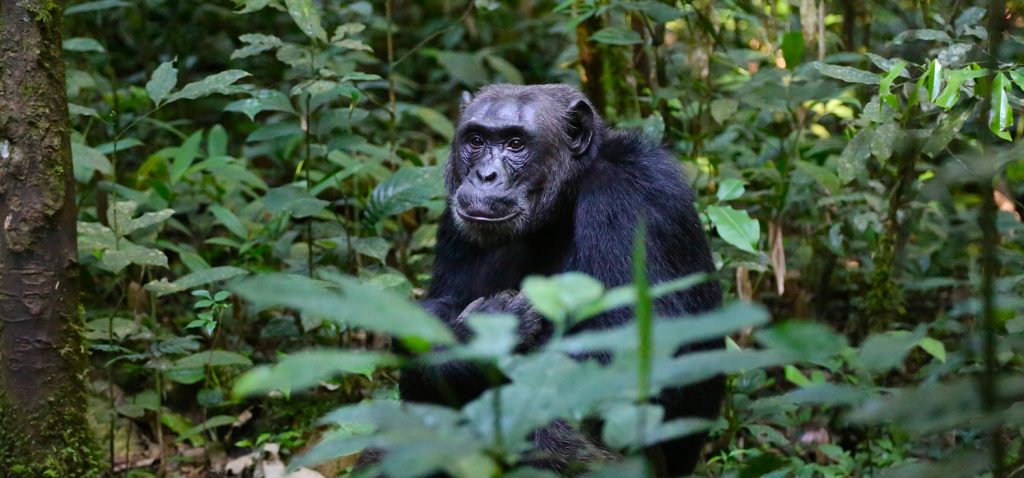
The Small-Scale Initiatives Program (PPI), managed by the French Committee of IUCN has created a rapid action grant to limit the impacts of the health crisis and secure the gains for the conservation of biodiversity in Sub-Saharan Africa. Indeed, during the global pandemic, some natural areas and some species benefited from the reduction in threats linked to human activities, but this was not always the case in certain regions of Africa. The return of the inhabitants of large metropolises to their villages of origin and a slowdown in the economy has caused a drop in their income as well as a reduction in resources for the management of protected areas. These circumstances have only increased the pressure on natural resources and endangered species, such as great apes and marine turtles. For this rapid action grant, a call for proposals launched by the PPI and 6 projects were selected for a maximum grant of € 3,500. They will take place in Benin, Cape Verde, Gabon, Niger, Democratic Republic of Congo and Senegal mainly to deal with an upsurge in poaching or to put in place measures that reduce the potential risk of transmission of the virus to Great Apes. « This is the first time that we have put in place such a response to the current crisis. It is important to support local organizations by quickly providing them with material and human resources that will allow them to regain control and not compromise the results achieved so far for the preservation of biodiversity.». Nicolas Salaün, « International Cooperation » Program Manager of the French Committee of IUCN AN EMERGENCY RESPONSE ALLOWING THE FINANCING OF CONCRETE AND RAPID ACTIONS This project responds to the unexpected situation due to the global pandemic. When developing our project we did not plan for any specific measures to prevent the spread of the disease. However, it could threaten the survival of the Grauer gorillas and chimpanzees present in the forest concessions of the local communities with which we work » Maurice Nsase from the NGO in DRC In Senegal, the closure of borders has forced fishermen to concentrate their fishing efforts on the national coast, in particular in areas usually protected such as the ornithological reserve of Kalissaye: “The high concentration of actors, boats and gear lead to an overexploitation of fishery resources which must at all costs be controlled and supervised quickly before the situation becomes irreversible ”, underlines the conservator of the reserve. More informations – Read the press release– The International Cooperation program of french Committee of IUCN– The small Initiatives Program
De nouveaux espaces forestiers sous gestion communautaire en Territoire de Walikale au Nord-Kivu en République Démocratique du Congo
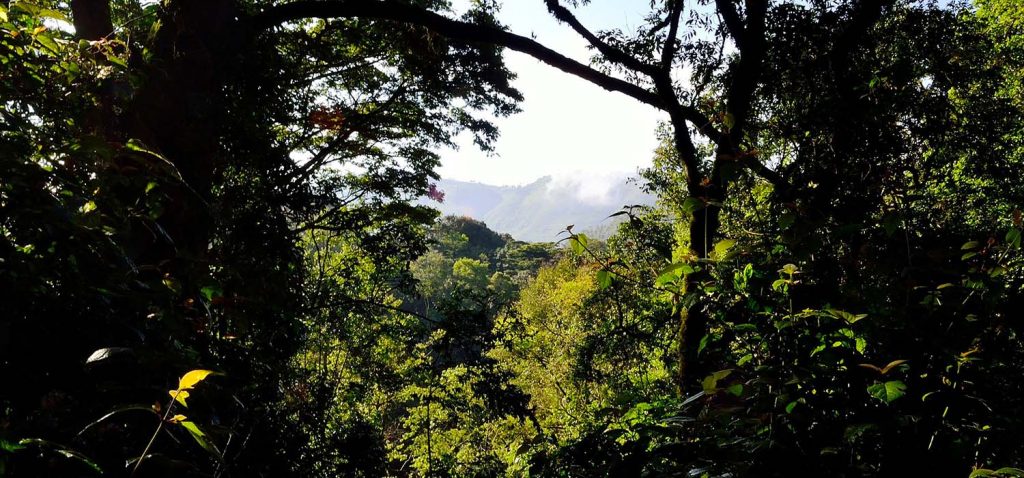
Le Code forestier de la RDC en son article 22 prévoit qu’une Communauté locale peut, à sa demande, obtenir à titre de concession, une partie ou la totalité de forêts en vertu de la coutume. C’est dans le cadre de la matérialisation de cet article qu’en date du 7 juillet 2020, le Gouverneur de la Province du Nord-Kivu a signé quatre arrêtés portant attribution des concessions forestières aux communautés locales (CFCL) Banisamasi, Basengele, Bananzigha et Bafuna-Bakano, du Secteur des Bakano en Territoire de Walikale après dix huit ans d’accompagnement de ce processus par l’ONG Forêt pour le Développement Intégral (FODI) partenaire du PPI depuis la fin de l’année 2019. A ce jour la RDC, compte soixante-dix CFCL déjà attribuées aux Communautés dont sept au Nord-Kivu. D’une superficie globale d’environ 120 260 ha, ces CFCL abritent les dernières populations des gorilles de Grauer vivant en dehors du Parc National de Kahuzi-Biega (PNKB), et des chimpanzés ainsi qu’une grande richesse d’espèces fauniques et floristiques. Par ailleurs, trois de ces CFCL sont contigües au PNKB dans sa partie septentrionale ; ce qui contribue à renforcer la conservation de ce patrimoine mondial de l’UNESCO. La phase de gestion de ces CFCL s’annonce déjà avec plusieurs défis dans l’accompagnement des communautés locales et autochtones pour l’utilisation durable des ressources forestières, la conservation des espèces animales endémiques et le développement socio-économique.
Conservation des collines boisées, l’habitat des chimpanzés de Bossou, Guinée, l’Afrique de l’Ouest
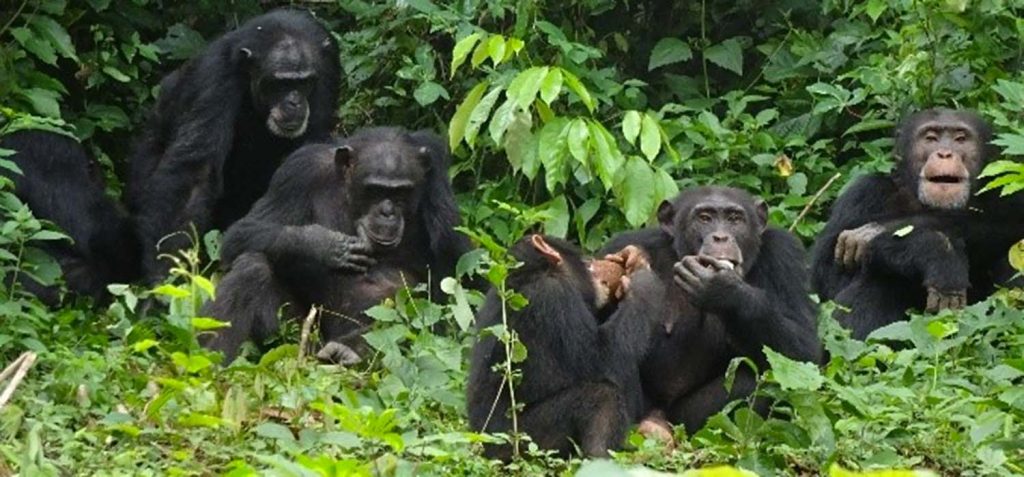
Situées dans la Préfecture de Lola, les collines boisées de Bossou (320 ha) font partie de la Réserve Naturelle des Monts Nimba, inscrite au patrimoine mondial de l’UNESCO. Le couvert végétal au pied de ces collines est composé de jachères, de savanes arborées connectées à des petites forêts adjacentes qui abritent une communauté de chimpanzés, espèce en danger critique d’extinction. Bossou et les villages environnants sont un exemple rare de site où les chimpanzés et la population locale cohabitent en relativement bonne harmonie depuis plusieurs générations, partageant les ressources de la même forêt. En dépit des efforts de protection sur le long terme, les chimpanzés de Bossou sont actuellement isolés des populations de chimpanzés des Monts Nimba avoisinants, ce qui crée un sérieux problème de viabilité pour cette communauté. Les ilots de forêts naturelles qu’habritent encore ces collines ont été endommagés et l’habitat des chimpanzés a été l’objet d’une pression intense qui constitue une grave menace pour leur survie. Pour répondre au problème, l’ONG AUDER en partenariat avec le PPI apporte un appui à l’Institut de Recherche Environnementale de Bossou (IREB) dans son programme de restauration du corridor vert. Le projet vise à : (i) Accroître les connaissances des communautés sur les chimpanzés pour favoriser leur participation aux efforts de conservation; (ii) Prévenir et assurer la gestion des feux de brousse autour du corridor et dans les communautés riveraines ; (iii) Améliorer les efforts de reboisement en cours dans le corridor, réaliser les plantations agro-forestières et (iv) Valoriser les meilleures pratiques agricoles par le développement des activités génératrices de revenus (AGR). À ce jour, l’appui du PPI a permis de réaliser les activités suivantes : Accroître les connaissances des communautés sur les menaces qui pèsent sur l’habitat des chimpanzés et favoriser leur participation aux efforts de conservation. Pour accroître la connaissance des communautés sur les menaces d’extinction auxquelles sont confrontés les chimpanzés de Bossou, les superviseurs d’AUDER ont sensibilisés 1 337 personnes dans les communautés riveraines à travers les réunions, assemblées villageoises et émissions radiophoniques. Ces messages ont suscité une forte mobilisation des communautés riveraines dans la gestion des incendies et leur engagement dans la réalisation des plantations agro-forestières dans les zones de savane comme mesure de lutte contre la savanisation et les feux de brousse. Également à travers des espaces de dialogue et d’échange, AUDER regroupe les élus locaux, leaders d’opinions, services techniques et acteurs évoluant dans la zone sur les questions spécifiques de conservation. A cet effet, trois forums communautaires ont été organisés regroupant au total 101 personnes et ont permis de définir des stratégies de prévention et de gestion des feux de brousse au Monts Nimba, d’élaborer un protocole d’accord pour la protection des collines boisées. Cet accord est a été signé par l’ensemble des parties prenantes (AUDER, IREB, CEGENS, DPEEF et communautés). Prévenir et assurer la gestion des feux de brousse autour des collines boisées et du corridor et dans les communautés riveraines Les feux de brousse constituent la principale menace sur l’habitat des chimpanzés et un facteur limitant à la réalisation du programme de restauration du corridor. Pour ce faire, une brigade de feu de 40 membres a été mise en place et rendue opérationnelle à travers deux sessions de formations organisées sur mesures de prévention et de gestion des feux de brousse et les itinéraires techniques de mise en place d’une plantation agro-forestière. Également des équipements et matériels de travails ont été fournis aux membres de la brigade (brouettes, machettes, casques, lime, arrosoirs, dabas, paires de bottes, imperméables et des pairs de gants). La brigade a été structurée, elle possède les documents juridiques (le statut et règlements intérieur et l’agrément) ; elle est appuyée sur le terrain par 2 surveillants et 6 guides de l’IREB pour la prévention et la gestion des feux, l’entretien des plantations en vue d’une bonne protection du corridor. Le projet accompagne l’IREB dans la réalisation des pare feux (bande de protection de 20 m de large et 600 m de long) qui limite le corridor et dans le défrichage et le nettoyage grâce à la mobilisation des trois villages riverains (Bossou, Nyon et Serengbara). Améliorer les efforts de reboisement en cours et valoriser l’agroforesterie pour réduire la pression sur le coteau Cette action vise à produire des plants forestiers et agro-forestiers de qualité pour le reboisement des espaces dégradés et également pourvoir les villages riverains en matériel végétal performant pour la réalisation des plantations agro-forestières autour des collines boisées de Bossou et du corridor. Une pépinière de 23 000 plants agro-forestiers (café, cacao, palmier, anacardes) et quelques plants forestiers a été installée à Theassou pour la campagne de reboisement 2021 grâce à l’appui financier des partenaires du PPI. La réalisation des plantations agro-forestières doit permettre à long terme de réduire significativement les risques d’incendies dans les collines boisées, protéger les activités de reboisement déjà réalisées et d’empêcher l’avancée progressive de la savane dans la zone. Il s’agit pour AUDER de réduire les systèmes de culture sur le coteau tout en les intégrant dans les systèmes de production durable et d’assurer la promotion sociale et économique des acteurs concernés. L’appui du projet a permis de reboiser 11,5 ha dans le corridor et 21,9 ha de plantations agro-forestières réalisées autour du corridor. Cette activité s’inscrit dans une dynamique locale de conservation et d’amélioration des conditions de vie des populations riveraines du corridor. Valoriser les meilleures pratiques agricoles pour réduire la pression autour des collines boisées et du corridor AUDER apporte son appui à la reconversion et à la spécialisation de certains producteurs à travers la promotion des initiatives locales génératrices de revenus en vue de réduire la pression sur le coteau. L’intensification de la culture légumière contribue à combler les besoins en légumes de plus en plus rares et à améliorer les revenus des femmes. Dans le même contexte, l’ONG développe des aménagements riz piscicoles pour permettre de cultiver le riz et le poisson au même emplacement afin de réduire le nomadisme cultural. 134 membres des groupements maraicher, Associations Villageoises d’Epargne et
Du 19 au 23 mai, célébrons la nature partout dans le Monde !
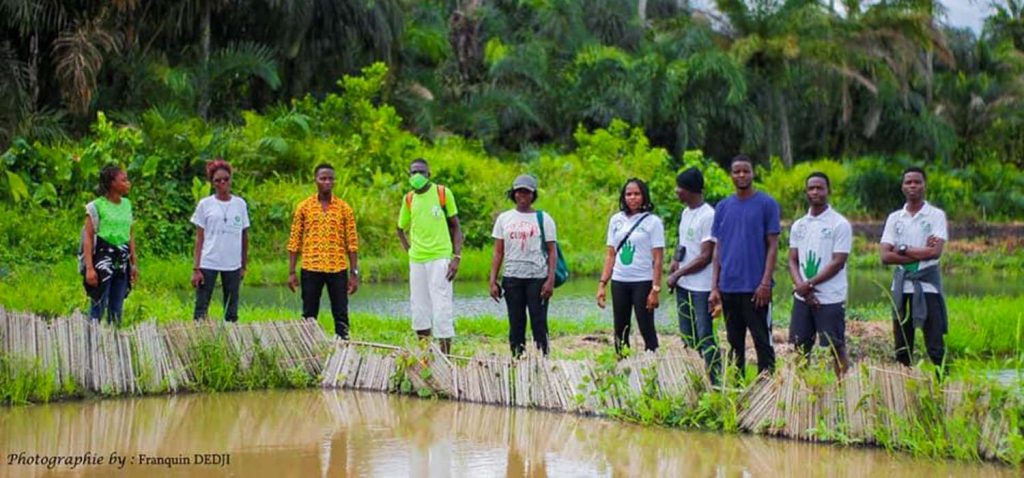
Initiée en France en 2007 par le Comité français de l’UICN, la Fête de la Nature est l’événement annuel qui mobilise l’ensemble des acteurs engagés pour la nature. La semaine du 22 mai, journée internationale de la biodiversité, des milliers d’animations gratuites sont proposées pour découvrir les richesses naturelles près de chez soi et vivre une expérience au plus proche de la nature. Cette célébration est aujourd’hui organisée de manière structurée et régulière en France, en Suisse, aux Pays-Bas et au Québec. En 2020, plusieurs associations agissant pour la nature sur le continent africain ont rejoint le mouvement. Toutes ont proposé de multiples animations qui ont pu intégrer la programmation francophone en ligne de l’événement, initiative qu’elles tiennent à reproduire lors des prochaines éditions. En ce début d’année 2021, la Fête de la Nature lance un nouvel appel à organisation auprès des acteurs de la nature dans le Monde et convie les acteurs des PPI à prendre part à cette célébration internationale de la nature ! Forte de son expérience, l’association française de la Fête de la Nature se propose d’accompagner l’émergence d’initiatives hors de France. Elle met également à disposition des structures francophones son site internet pour leur permettre d’enregistrer leurs animations organisées entre le 19 et le 23 mai 2021. Partenaire officiel du congrès mondial de la nature de l’UICN qui se tiendra en septembre 2021 à Marseille, l’association Fête de la Nature valorisera à cette occasion l’ensemble des initiatives hors de France qui auront été proposées. Cette communication contribuera ainsi à porter l’attention sur le rapport que nous entretenons tous avec le vivant et les acteurs qui s’engagent à le préserver. Comment participer ? Téléchargez le Guide de l’organisateur destiné aux pays francophones et suivez les instructions afin de proposer des animations dans votre pays lors de la Fête de la Nature 2021. Contact : info@fetedelanature.com
From May 19th to 23rd, celebrate nature everywhere around the World!
Introduced in France in 2007 by the IUCN French comity, the Fête de la Nature (Nature days) is the annual event during which all the stakeholders – people and organizations – engaged for nature swing into action. During the week of May 22nd, the international biodiversity day, thousands of free activities are offered across France for everyone to discover the natural wealth in their vicinity and experience the contact of nature. This celebration is now structured and organized regularly in France, Switzerland, The Netherlands and Quebec (Canada). In 2020, several NGOs from Africa joined the action. All of them offered many activities which have been added to the program on the Fête de la Nature’s French website and want to repeat this positive experience. In early 2021, the Fête de la Nature is calling again for NGOs from the World and players involved in PPI to take part in this worldwide celebration of nature! Fortified by 15 years of experience, the French’s NGO offers its knowledge to help actions to emerge out of France. Also, it gives to French speaking countries the opportunity to register their activities organized between May 19th and 23rd 2021. The Fête de la nature organization is one of the official partners of IUCN nature congress which will take place in September 2021 in Marseille. During this event, all the actions abroad certified for the Fête de la Nature 2021 will be highlighted. This communication will contribute in drawing participants’ attention on the relationship between humans and nature and the stakeholders who work to preserve it. How to participate? Upload the “Guide de l’organisateur” (Organizer’s guide book) meant for French speaking countries and follow instructions in order to register activities in your country during the Fête de la Nature 2021. Contact: info@fetedelanature.com
The first Forum on community conservation of great apes of the Congo Basin forests
The first Forum on community conservation of great apes from the forests of the Congo Basin Faced with the continued decline of great apes and their habitats around the world, civil society in Central Africa met from November 18th to 19th, 2021 at the city hall of Yaoundé in Cameroon to talk about community conservation of great apes in the forests of the Congo basin. It was thus during a forum, which brought together more than a hundred participants (conservation practitioners, academics, students, donors, political authorities, etc.), that 6 conservation themes were debated regarding these vulnerable species. A first of its kind in Central Africa, this forum was organized under the sign of promoting « local initiatives to sustainably protect the great apes of Cameroonian forests and the Congo Basin », through 20 exhibition stands in order to present to the public initiatives, products and services of local actors on biodiversity conservation. The discussions around these themes made it possible to raise many questions, still unresolved but decisive for the effective conservation of great apes. It was notably a question of making the scientific inventory of the situation of the great apes of the forests of the Congo Basin in 2020. Discussions took place on the notion of community conservation and its effectiveness on the protection of great apes in the context of the forests of the Congo Basin. The baseline of this meeting was based on the necessary reflection on the place, role and contribution of local communities in Central Africa in conservation. What are their perceptions and representations on this major contemporary issue for Africa and the world? The direct testimonies of 4 community leaders coming from Nkala (Téké community of Maï Ndombe in DR Congo), Messamena and Somalomo (Badjoué and Baka community of the Dja Reserve in Cameroon), the littoral (Banen community, the forest of Ebo in Cameroon and Bertoua (Képéré community on the outskirts of Deng Deng Cameroon National Park) helped free the community voice. The positioning of these different testimonies allowed participants to realize, if this is only confirmation, the vast misunderstanding and discrepancy between local / community expectations and the conservation objectives promoted in rural and community settings. During this forum, it was also question of the sustainability of funding for community conservation by local and community organizations, in particular the search for suitable and viable funding for these local actors highly dependent on the money provided by external partners. Finally, the participants raised the issue of collaborative leadership that promotes a strong contribution of local and community organizations in the conservation of great apes and biodiversity in the forests of the Congo Basin. The forum had some major moments to allow the public and the participants to immerse themselves, in a surge of affirmed citizenship, in the daily life of the conservation of the great apes. An excursion to the Mefou primate sanctuary was organized for the students of Yaoundé, their parents and teachers. The work of the members of the GSAC Alliance was fully exposed through the visit of the premises of the NGO TF RD (Tropical Frorest and Rural Development) of Cameroon which is developing a model for valuing non-timber forest products and their marketing… It is recalled that this sub-regional meeting was organized by the Alliance GSAC network (Alliance for the community conservation of great apes in Central Africa). It has been supported since its creation by the French Committee of the International Union for the Conservation of Nature. This network has existed since 2016 and already has several transversal actions to its credit aimed at technically and institutionally strengthening local civil society, but also allowing it to position itself as a key player in the actions to be implemented to save the great apes of the forests of the basin of the Congo.
Le premier Forum sur la conservation communautaire des grands singes des forêts du bassins du Congo
Face au déclin continu des grands singes et leurs habitats dans le monde, la société civile d’Afrique centrale s’est retrouvée du 18 au 19 novembre 2021 à la mairie de Yaoundé (Cameroun) pour aborder les enjeux de la conservation communautaire des grands singes des forêts du bassin du Congo. C’est donc au cours d’un forum, ayant réuni plus d’une centaine de participants (praticiens de la conservation, universitaires, étudiants, bailleurs, autorités politiques, etc.), qu’ont été débattus 6 thématiques de conservation sur ces espèces vulnérables. Un premier du genre en Afrique centrale, ce forum a été organisé sous le signe de la valorisation des « initiatives locales pour protéger durablement les grands singes des forêts camerounaises et du bassin du Congo », à travers 20 Stands d’exposition afin de présenter au public les initiatives, produits et services des acteurs locaux sur la conservation de la biodiversité. Les échanges autour de ces thématiques ont permis d’évoquer beaucoup de questions, encore en suspens mais déterminantes pour une conservation efficace des grands singes. Il a été notamment question de faire l’état des lieux scientifique de la situation des grands singes des forêts du bassin du Congo. Des discussions ont eu lieu sur la notion de conservation communautaire et son efficacité sur la protection des grands singes dans le contexte des forêts du bassin du Congo. La ligne de fond de cette rencontre était basée sur la nécessaire réflexion sur la place, le rôle et la contribution des communautés locales d’Afrique centrale dans la conservation. Quelles sont leurs perceptions et représentations sur cet enjeu contemporain majeur pour l’Afrique et le monde ? Les témoignages directs de 4 leaders communautaires venant de Nkala (communauté Téké du Maï Ndombe en RD Congo), de Messamena et Somalomo (communauté Badjoué et Baka de la Reserve du Dja au Cameroun), du littoral (communauté Banen, de la foret d’Ebo au Cameroun) et de Bertoua (communauté Képéré de la périphérie du Parc national de Deng Deng Cameroun) ont permis de libérer la voix communautaire. Le positionnement de ces différents témoignages a permis aux participants de se rendre compte, si ce n’est qu’une confirmation, du vaste quiproquo et décalage entre les attentes locales/communautaires et les objectifs de conservation promus en milieu rural et communautaire. Au cours de ce forum, la question du financement de la conservation communautaire a été abordée. En particulier, les financements sont aujourd’hui peu adaptés aux besoins des acteurs locaux fortement tributaires des fonds apportés par des partenaires extérieurs. Enfin, les participants ont évoqué la question du leadership collaboratif qui favorise une forte contribution des organisations locales et communautaires dans la conservation des grands singes et de la biodiversité des forêts du bassin du Congo. Le forum a connu des moments forts pour permettre au public et aux participants de s’imprégner, dans un élan de citoyenneté affirmée, le quotidien de la conservation des grands singes. Une excursion au sanctuaire des primates de la Mefou été organisée en faveur des élèves de Yaoundé, leurs parents et les enseignants. Le travail des membres de l’Alliance GSAC a été pleinement exposé à travers la visite des locaux de l’ONG TF RD (Tropical Forest and Rural Development) du Cameroun qui développent un modèle de valorisation des produits forestiers non ligneux et leur mise en marché. Il est rappelé que cette rencontre sous-régionale a été organisée par le réseau Alliance GSAC (Alliance pour la conservation communautaire des grands singes en Afrique centrale). Il est soutenu depuis sa création par le PPI, géré par le Comité Français de l’UICN. Ce réseau existe depuis 2016 et a déjà son actif plusieurs actions transversales destinées à renforcer techniquement et institutionnellement la société civile locale, mais aussi lui permettre de positionner comme acteur clé dans les solutions à mettre en œuvre pour sauver les grands singes des forêts du bassin du Congo.
Conservation de la biodiversité à la périphérie du Parc National de Mole (Ghana) grâce au développement de filières vertes
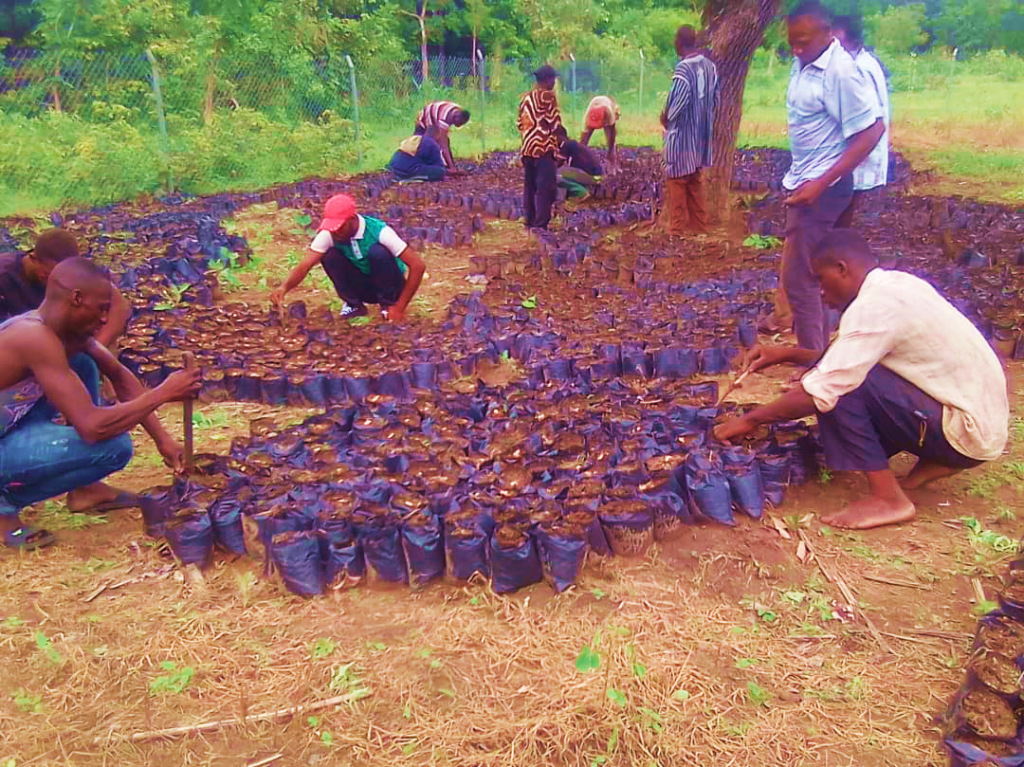
La Coalition for the Development of Northern Ghana (NORTHCODE) est une organisation non gouvernementale ghanéenne. Elle travaille dans le domaine de la conservation de la biodiversité et du développement rural dans l’aire communautaire de gestion des ressources (CREMA) de Jelinkon. Celle-ci est située en périphérie du Parc National de Mole (MNP – environ 4840 km²), au nord du Ghana dans la région des savanes. Le Parc, et dans une moindre mesure la CREMA de Jelinkon, abritent encore une importante biodiversité patrimoniale d’intérêt international pour la conservation. Ainsi, 5 espèces de plantes et autant de papillons endémiques y sont recensés. C’est aussi plus de 93 espèces de mammifères (éléphants, buffles, antilopes, cob de buffon et de fassa, lion, babouin…), 400 espèces d’oiseaux, 9 espèces d’amphibiens et 33 de reptiles qui y sont rencontrés. L’ensemble évoluant dans des paysages de savanes peuplées notamment de Parkia (Parkia biglobosa) et de Karités (Vitellaria paradoxa) deux arbres d’intérêts économiques et nutritionnels vitaux (en particulier en saison sèche) pour les communautés riveraines. Malheureusement, comme souvent, cette biodiversité est menacée par les pressions anthropiques locales : feux de brousse, braconnage, trafic de bois pour les marchés internationaux (ex : bois de rose), agriculture, surpâturage, activités de cueillette non raisonnées, etc. Pour pallier à cela et garantir l’intégrité écologique du Parc, NORTHCODE entend aujourd’hui œuvrer d’une part pour une gouvernance et une gestion plus inclusive et efficace des ressources naturelles. Et d’autre part souhaite développer des moyens de subsistance ‘’verts’’ dans les zones périphériques de la réserve. Pour la soutenir dans cette démarche, NORTHCODE est bénéficiaire d’une subvention du PPI depuis février 2020. Grâce à cette subvention, NORTHCODE a pu appuyer à l’organisation, à la formation personnalisée et à l’équipement de 220 producteurs de miel dont 65% de femmes et 35% d’hommes. Au cours de la formation un accent particulier a été mis sur la récolte et le conditionnement du miel afin de garantir une qualité sanitaire et gustative améliorant la compétitivité et la valeur ajoutée du produit fini. Au cours de cette même période, tous les anciens comités de gestion des ressources communautaires (CRMC) et les comités exécutifs de la CREMA (CEC) ont été réorganisés pour être plus efficaces et fonctionnels. En outre, 50 membres de la communauté ont été sélectionnés et formés (avec le soutien logistique et technique du Parc Mole) comme écogardes CREMA. Ils sont maintenant aptes à surveiller en permanence les activités illégales dans les zones centrales de la CREMA.Une pépinière communautaire a été créée et 10 000 plants d’arbres d’essences locales (kapok, balanites et parkia) ont été produit et transplantés sur des terres dégradées de la CREMA. Enfin, pour renforcer les liens entre les différents acteurs (ONG, autorités traditionnelles, agences gouvernementales, etc.) de la CREMA de Jelikon et du Parc de Mole, NORTHCODE a organisé plusieurs ateliers de partage d’expériences ainsi qu’un safari d’une journée au sein du Parc pour les membres de la communauté. Une expérience unique pour ces derniers qui pour certains, découvraient pour la première fois la beauté et l’ambiance d’une réserve bien protégée. A court terme, NORTHCODE prévoit de poursuivre et de développer ses activités de soutien aux patrouilleurs et producteurs de miel et compte pour ce faire travailler davantage à la mobilisation de ressources auprès de philanthropes et de donateurs.