

De nouveaux espaces forestiers sous gestion communautaire en Territoire de Walikale au Nord-Kivu en République Démocratique du Congo
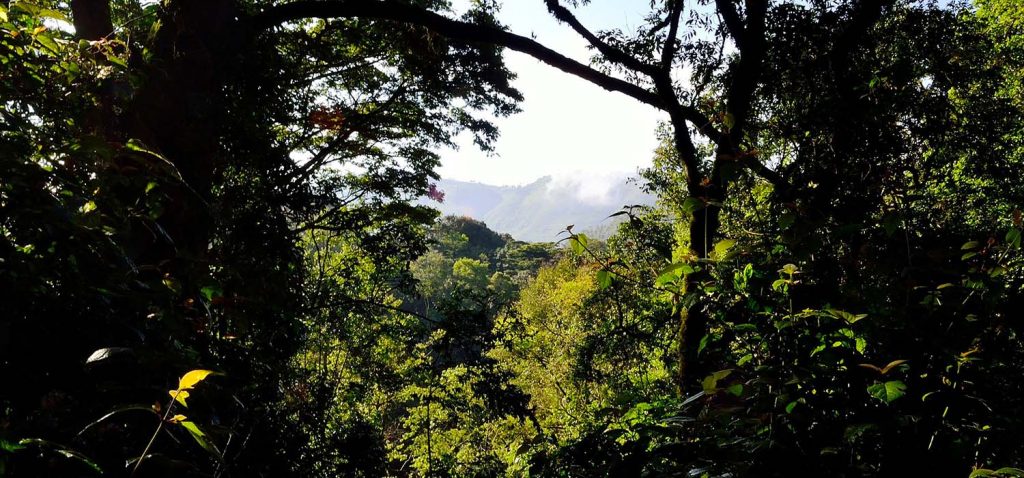
Le Code forestier de la RDC en son article 22 prévoit qu’une Communauté locale peut, à sa demande, obtenir à titre de concession, une partie ou la totalité de forêts en vertu de la coutume. C’est dans le cadre de la matérialisation de cet article qu’en date du 7 juillet 2020, le Gouverneur de la Province du Nord-Kivu a signé quatre arrêtés portant attribution des concessions forestières aux communautés locales (CFCL) Banisamasi, Basengele, Bananzigha et Bafuna-Bakano, du Secteur des Bakano en Territoire de Walikale après dix huit ans d’accompagnement de ce processus par l’ONG Forêt pour le Développement Intégral (FODI) partenaire du PPI depuis la fin de l’année 2019. A ce jour la RDC, compte soixante-dix CFCL déjà attribuées aux Communautés dont sept au Nord-Kivu. D’une superficie globale d’environ 120 260 ha, ces CFCL abritent les dernières populations des gorilles de Grauer vivant en dehors du Parc National de Kahuzi-Biega (PNKB), et des chimpanzés ainsi qu’une grande richesse d’espèces fauniques et floristiques. Par ailleurs, trois de ces CFCL sont contigües au PNKB dans sa partie septentrionale ; ce qui contribue à renforcer la conservation de ce patrimoine mondial de l’UNESCO. La phase de gestion de ces CFCL s’annonce déjà avec plusieurs défis dans l’accompagnement des communautés locales et autochtones pour l’utilisation durable des ressources forestières, la conservation des espèces animales endémiques et le développement socio-économique.
Conservation des collines boisées, l’habitat des chimpanzés de Bossou, Guinée, l’Afrique de l’Ouest
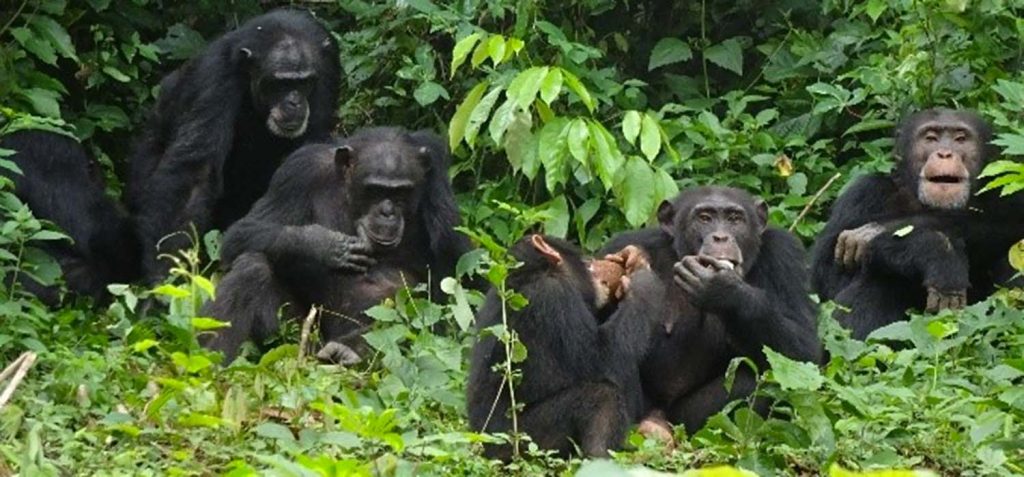
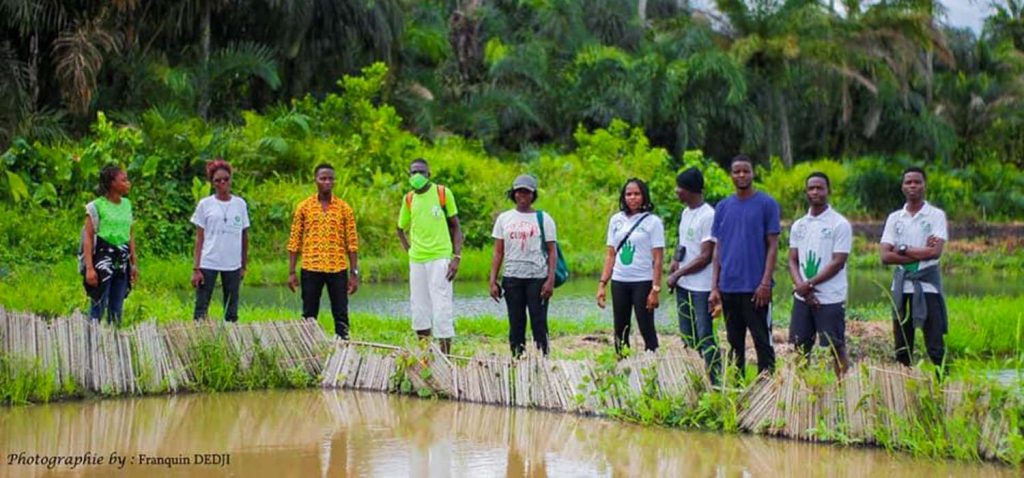
Situées dans la Préfecture de Lola, les collines boisées de Bossou (320 ha) font partie de la Réserve Naturelle des Monts Nimba, inscrite au patrimoine mondial de l’UNESCO. Le couvert végétal au pied de ces collines est composé de jachères, de savanes arborées connectées à des petites forêts adjacentes qui abritent une communauté de chimpanzés, espèce en danger critique d’extinction. Bossou et les villages environnants sont un exemple rare de site où les chimpanzés et la population locale cohabitent en relativement bonne harmonie depuis plusieurs générations, partageant les ressources de la même forêt. En dépit des efforts de protection sur le long terme, les chimpanzés de Bossou sont actuellement isolés des populations de chimpanzés des Monts Nimba avoisinants, ce qui crée un sérieux problème de viabilité pour cette communauté. Les ilots de forêts naturelles qu’habritent encore ces collines ont été endommagés et l’habitat des chimpanzés a été l’objet d’une pression intense qui constitue une grave menace pour leur survie. Pour répondre au problème, l’ONG AUDER en partenariat avec le PPI apporte un appui à l’Institut de Recherche Environnementale de Bossou (IREB) dans son programme de restauration du corridor vert. Le projet vise à : (i) Accroître les connaissances des communautés sur les chimpanzés pour favoriser leur participation aux efforts de conservation; (ii) Prévenir et assurer la gestion des feux de brousse autour du corridor et dans les communautés riveraines ; (iii) Améliorer les efforts de reboisement en cours dans le corridor, réaliser les plantations agro-forestières et (iv) Valoriser les meilleures pratiques agricoles par le développement des activités génératrices de revenus (AGR). À ce jour, l’appui du PPI a permis de réaliser les activités suivantes : Accroître les connaissances des communautés sur les menaces qui pèsent sur l’habitat des chimpanzés et favoriser leur participation aux efforts de conservation. Pour accroître la connaissance des communautés sur les menaces d’extinction auxquelles sont confrontés les chimpanzés de Bossou, les superviseurs d’AUDER ont sensibilisés 1 337 personnes dans les communautés riveraines à travers les réunions, assemblées villageoises et émissions radiophoniques. Ces messages ont suscité une forte mobilisation des communautés riveraines dans la gestion des incendies et leur engagement dans la réalisation des plantations agro-forestières dans les zones de savane comme mesure de lutte contre la savanisation et les feux de brousse. Également à travers des espaces de dialogue et d’échange, AUDER regroupe les élus locaux, leaders d’opinions, services techniques et acteurs évoluant dans la zone sur les questions spécifiques de conservation. A cet effet, trois forums communautaires ont été organisés regroupant au total 101 personnes et ont permis de définir des stratégies de prévention et de gestion des feux de brousse au Monts Nimba, d’élaborer un protocole d’accord pour la protection des collines boisées. Cet accord est a été signé par l’ensemble des parties prenantes (AUDER, IREB, CEGENS, DPEEF et communautés). Prévenir et assurer la gestion des feux de brousse autour des collines boisées et du corridor et dans les communautés riveraines Les feux de brousse constituent la principale menace sur l’habitat des chimpanzés et un facteur limitant à la réalisation du programme de restauration du corridor. Pour ce faire, une brigade de feu de 40 membres a été mise en place et rendue opérationnelle à travers deux sessions de formations organisées sur mesures de prévention et de gestion des feux de brousse et les itinéraires techniques de mise en place d’une plantation agro-forestière. Également des équipements et matériels de travails ont été fournis aux membres de la brigade (brouettes, machettes, casques, lime, arrosoirs, dabas, paires de bottes, imperméables et des pairs de gants). La brigade a été structurée, elle possède les documents juridiques (le statut et règlements intérieur et l’agrément) ; elle est appuyée sur le terrain par 2 surveillants et 6 guides de l’IREB pour la prévention et la gestion des feux, l’entretien des plantations en vue d’une bonne protection du corridor. Le projet accompagne l’IREB dans la réalisation des pare feux (bande de protection de 20 m de large et 600 m de long) qui limite le corridor et dans le défrichage et le nettoyage grâce à la mobilisation des trois villages riverains (Bossou, Nyon et Serengbara). Améliorer les efforts de reboisement en cours et valoriser l’agroforesterie pour réduire la pression sur le coteau Cette action vise à produire des plants forestiers et agro-forestiers de qualité pour le reboisement des espaces dégradés et également pourvoir les villages riverains en matériel végétal performant pour la réalisation des plantations agro-forestières autour des collines boisées de Bossou et du corridor. Une pépinière de 23 000 plants agro-forestiers (café, cacao, palmier, anacardes) et quelques plants forestiers a été installée à Theassou pour la campagne de reboisement 2021 grâce à l’appui financier des partenaires du PPI. La réalisation des plantations agro-forestières doit permettre à long terme de réduire significativement les risques d’incendies dans les collines boisées, protéger les activités de reboisement déjà réalisées et d’empêcher l’avancée progressive de la savane dans la zone. Il s’agit pour AUDER de réduire les systèmes de culture sur le coteau tout en les intégrant dans les systèmes de production durable et d’assurer la promotion sociale et économique des acteurs concernés. L’appui du projet a permis de reboiser 11,5 ha dans le corridor et 21,9 ha de plantations agro-forestières réalisées autour du corridor. Cette activité s’inscrit dans une dynamique locale de conservation et d’amélioration des conditions de vie des populations riveraines du corridor. Valoriser les meilleures pratiques agricoles pour réduire la pression autour des collines boisées et du corridor AUDER apporte son appui à la reconversion et à la spécialisation de certains producteurs à travers la promotion des initiatives locales génératrices de revenus en vue de réduire la pression sur le coteau. L’intensification de la culture légumière contribue à combler les besoins en légumes de plus en plus rares et à améliorer les revenus des femmes. Dans le même contexte, l’ONG développe des aménagements riz piscicoles pour permettre de cultiver le riz et le poisson au même emplacement afin de réduire le nomadisme cultural. 134 membres des groupements maraicher, Associations Villageoises d’Epargne et
Du 19 au 23 mai, célébrons la nature partout dans le Monde !
Initiée en France en 2007 par le Comité français de l’UICN, la Fête de la Nature est l’événement annuel qui mobilise l’ensemble des acteurs engagés pour la nature. La semaine du 22 mai, journée internationale de la biodiversité, des milliers d’animations gratuites sont proposées pour découvrir les richesses naturelles près de chez soi et vivre une expérience au plus proche de la nature. Cette célébration est aujourd’hui organisée de manière structurée et régulière en France, en Suisse, aux Pays-Bas et au Québec. En 2020, plusieurs associations agissant pour la nature sur le continent africain ont rejoint le mouvement. Toutes ont proposé de multiples animations qui ont pu intégrer la programmation francophone en ligne de l’événement, initiative qu’elles tiennent à reproduire lors des prochaines éditions. En ce début d’année 2021, la Fête de la Nature lance un nouvel appel à organisation auprès des acteurs de la nature dans le Monde et convie les acteurs des PPI à prendre part à cette célébration internationale de la nature ! Forte de son expérience, l’association française de la Fête de la Nature se propose d’accompagner l’émergence d’initiatives hors de France. Elle met également à disposition des structures francophones son site internet pour leur permettre d’enregistrer leurs animations organisées entre le 19 et le 23 mai 2021. Partenaire officiel du congrès mondial de la nature de l’UICN qui se tiendra en septembre 2021 à Marseille, l’association Fête de la Nature valorisera à cette occasion l’ensemble des initiatives hors de France qui auront été proposées. Cette communication contribuera ainsi à porter l’attention sur le rapport que nous entretenons tous avec le vivant et les acteurs qui s’engagent à le préserver. Comment participer ? Téléchargez le Guide de l’organisateur destiné aux pays francophones et suivez les instructions afin de proposer des animations dans votre pays lors de la Fête de la Nature 2021. Contact : info@fetedelanature.com
From May 19th to 23rd, celebrate nature everywhere around the World!
Introduced in France in 2007 by the IUCN French comity, the Fête de la Nature (Nature days) is the annual event during which all the stakeholders – people and organizations – engaged for nature swing into action. During the week of May 22nd, the international biodiversity day, thousands of free activities are offered across France for everyone to discover the natural wealth in their vicinity and experience the contact of nature. This celebration is now structured and organized regularly in France, Switzerland, The Netherlands and Quebec (Canada). In 2020, several NGOs from Africa joined the action. All of them offered many activities which have been added to the program on the Fête de la Nature’s French website and want to repeat this positive experience. In early 2021, the Fête de la Nature is calling again for NGOs from the World and players involved in PPI to take part in this worldwide celebration of nature! Fortified by 15 years of experience, the French’s NGO offers its knowledge to help actions to emerge out of France. Also, it gives to French speaking countries the opportunity to register their activities organized between May 19th and 23rd 2021. The Fête de la nature organization is one of the official partners of IUCN nature congress which will take place in September 2021 in Marseille. During this event, all the actions abroad certified for the Fête de la Nature 2021 will be highlighted. This communication will contribute in drawing participants’ attention on the relationship between humans and nature and the stakeholders who work to preserve it. How to participate? Upload the “Guide de l’organisateur” (Organizer’s guide book) meant for French speaking countries and follow instructions in order to register activities in your country during the Fête de la Nature 2021. Contact: info@fetedelanature.com
The first Forum on community conservation of great apes of the Congo Basin forests
The first Forum on community conservation of great apes from the forests of the Congo Basin Faced with the continued decline of great apes and their habitats around the world, civil society in Central Africa met from November 18th to 19th, 2021 at the city hall of Yaoundé in Cameroon to talk about community conservation of great apes in the forests of the Congo basin. It was thus during a forum, which brought together more than a hundred participants (conservation practitioners, academics, students, donors, political authorities, etc.), that 6 conservation themes were debated regarding these vulnerable species. A first of its kind in Central Africa, this forum was organized under the sign of promoting « local initiatives to sustainably protect the great apes of Cameroonian forests and the Congo Basin », through 20 exhibition stands in order to present to the public initiatives, products and services of local actors on biodiversity conservation. The discussions around these themes made it possible to raise many questions, still unresolved but decisive for the effective conservation of great apes. It was notably a question of making the scientific inventory of the situation of the great apes of the forests of the Congo Basin in 2020. Discussions took place on the notion of community conservation and its effectiveness on the protection of great apes in the context of the forests of the Congo Basin. The baseline of this meeting was based on the necessary reflection on the place, role and contribution of local communities in Central Africa in conservation. What are their perceptions and representations on this major contemporary issue for Africa and the world? The direct testimonies of 4 community leaders coming from Nkala (Téké community of Maï Ndombe in DR Congo), Messamena and Somalomo (Badjoué and Baka community of the Dja Reserve in Cameroon), the littoral (Banen community, the forest of Ebo in Cameroon and Bertoua (Képéré community on the outskirts of Deng Deng Cameroon National Park) helped free the community voice. The positioning of these different testimonies allowed participants to realize, if this is only confirmation, the vast misunderstanding and discrepancy between local / community expectations and the conservation objectives promoted in rural and community settings. During this forum, it was also question of the sustainability of funding for community conservation by local and community organizations, in particular the search for suitable and viable funding for these local actors highly dependent on the money provided by external partners. Finally, the participants raised the issue of collaborative leadership that promotes a strong contribution of local and community organizations in the conservation of great apes and biodiversity in the forests of the Congo Basin. The forum had some major moments to allow the public and the participants to immerse themselves, in a surge of affirmed citizenship, in the daily life of the conservation of the great apes. An excursion to the Mefou primate sanctuary was organized for the students of Yaoundé, their parents and teachers. The work of the members of the GSAC Alliance was fully exposed through the visit of the premises of the NGO TF RD (Tropical Frorest and Rural Development) of Cameroon which is developing a model for valuing non-timber forest products and their marketing… It is recalled that this sub-regional meeting was organized by the Alliance GSAC network (Alliance for the community conservation of great apes in Central Africa). It has been supported since its creation by the French Committee of the International Union for the Conservation of Nature. This network has existed since 2016 and already has several transversal actions to its credit aimed at technically and institutionally strengthening local civil society, but also allowing it to position itself as a key player in the actions to be implemented to save the great apes of the forests of the basin of the Congo.
Le premier Forum sur la conservation communautaire des grands singes des forêts du bassins du Congo
Face au déclin continu des grands singes et leurs habitats dans le monde, la société civile d’Afrique centrale s’est retrouvée du 18 au 19 novembre 2021 à la mairie de Yaoundé (Cameroun) pour aborder les enjeux de la conservation communautaire des grands singes des forêts du bassin du Congo. C’est donc au cours d’un forum, ayant réuni plus d’une centaine de participants (praticiens de la conservation, universitaires, étudiants, bailleurs, autorités politiques, etc.), qu’ont été débattus 6 thématiques de conservation sur ces espèces vulnérables. Un premier du genre en Afrique centrale, ce forum a été organisé sous le signe de la valorisation des « initiatives locales pour protéger durablement les grands singes des forêts camerounaises et du bassin du Congo », à travers 20 Stands d’exposition afin de présenter au public les initiatives, produits et services des acteurs locaux sur la conservation de la biodiversité. Les échanges autour de ces thématiques ont permis d’évoquer beaucoup de questions, encore en suspens mais déterminantes pour une conservation efficace des grands singes. Il a été notamment question de faire l’état des lieux scientifique de la situation des grands singes des forêts du bassin du Congo. Des discussions ont eu lieu sur la notion de conservation communautaire et son efficacité sur la protection des grands singes dans le contexte des forêts du bassin du Congo. La ligne de fond de cette rencontre était basée sur la nécessaire réflexion sur la place, le rôle et la contribution des communautés locales d’Afrique centrale dans la conservation. Quelles sont leurs perceptions et représentations sur cet enjeu contemporain majeur pour l’Afrique et le monde ? Les témoignages directs de 4 leaders communautaires venant de Nkala (communauté Téké du Maï Ndombe en RD Congo), de Messamena et Somalomo (communauté Badjoué et Baka de la Reserve du Dja au Cameroun), du littoral (communauté Banen, de la foret d’Ebo au Cameroun) et de Bertoua (communauté Képéré de la périphérie du Parc national de Deng Deng Cameroun) ont permis de libérer la voix communautaire. Le positionnement de ces différents témoignages a permis aux participants de se rendre compte, si ce n’est qu’une confirmation, du vaste quiproquo et décalage entre les attentes locales/communautaires et les objectifs de conservation promus en milieu rural et communautaire. Au cours de ce forum, la question du financement de la conservation communautaire a été abordée. En particulier, les financements sont aujourd’hui peu adaptés aux besoins des acteurs locaux fortement tributaires des fonds apportés par des partenaires extérieurs. Enfin, les participants ont évoqué la question du leadership collaboratif qui favorise une forte contribution des organisations locales et communautaires dans la conservation des grands singes et de la biodiversité des forêts du bassin du Congo. Le forum a connu des moments forts pour permettre au public et aux participants de s’imprégner, dans un élan de citoyenneté affirmée, le quotidien de la conservation des grands singes. Une excursion au sanctuaire des primates de la Mefou été organisée en faveur des élèves de Yaoundé, leurs parents et les enseignants. Le travail des membres de l’Alliance GSAC a été pleinement exposé à travers la visite des locaux de l’ONG TF RD (Tropical Forest and Rural Development) du Cameroun qui développent un modèle de valorisation des produits forestiers non ligneux et leur mise en marché. Il est rappelé que cette rencontre sous-régionale a été organisée par le réseau Alliance GSAC (Alliance pour la conservation communautaire des grands singes en Afrique centrale). Il est soutenu depuis sa création par le PPI, géré par le Comité Français de l’UICN. Ce réseau existe depuis 2016 et a déjà son actif plusieurs actions transversales destinées à renforcer techniquement et institutionnellement la société civile locale, mais aussi lui permettre de positionner comme acteur clé dans les solutions à mettre en œuvre pour sauver les grands singes des forêts du bassin du Congo.
Conservation de la biodiversité à la périphérie du Parc National de Mole (Ghana) grâce au développement de filières vertes
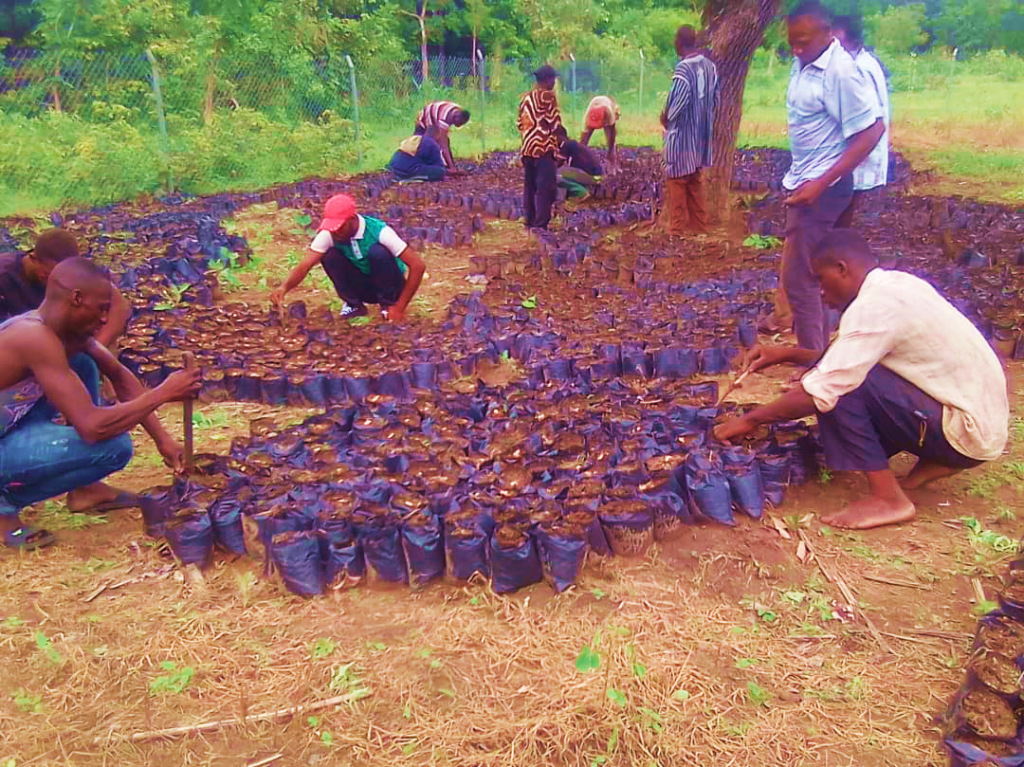
La Coalition for the Development of Northern Ghana (NORTHCODE) est une organisation non gouvernementale ghanéenne. Elle travaille dans le domaine de la conservation de la biodiversité et du développement rural dans l’aire communautaire de gestion des ressources (CREMA) de Jelinkon. Celle-ci est située en périphérie du Parc National de Mole (MNP – environ 4840 km²), au nord du Ghana dans la région des savanes. Le Parc, et dans une moindre mesure la CREMA de Jelinkon, abritent encore une importante biodiversité patrimoniale d’intérêt international pour la conservation. Ainsi, 5 espèces de plantes et autant de papillons endémiques y sont recensés. C’est aussi plus de 93 espèces de mammifères (éléphants, buffles, antilopes, cob de buffon et de fassa, lion, babouin…), 400 espèces d’oiseaux, 9 espèces d’amphibiens et 33 de reptiles qui y sont rencontrés. L’ensemble évoluant dans des paysages de savanes peuplées notamment de Parkia (Parkia biglobosa) et de Karités (Vitellaria paradoxa) deux arbres d’intérêts économiques et nutritionnels vitaux (en particulier en saison sèche) pour les communautés riveraines. Malheureusement, comme souvent, cette biodiversité est menacée par les pressions anthropiques locales : feux de brousse, braconnage, trafic de bois pour les marchés internationaux (ex : bois de rose), agriculture, surpâturage, activités de cueillette non raisonnées, etc. Pour pallier à cela et garantir l’intégrité écologique du Parc, NORTHCODE entend aujourd’hui œuvrer d’une part pour une gouvernance et une gestion plus inclusive et efficace des ressources naturelles. Et d’autre part souhaite développer des moyens de subsistance ‘’verts’’ dans les zones périphériques de la réserve. Pour la soutenir dans cette démarche, NORTHCODE est bénéficiaire d’une subvention du PPI depuis février 2020. Grâce à cette subvention, NORTHCODE a pu appuyer à l’organisation, à la formation personnalisée et à l’équipement de 220 producteurs de miel dont 65% de femmes et 35% d’hommes. Au cours de la formation un accent particulier a été mis sur la récolte et le conditionnement du miel afin de garantir une qualité sanitaire et gustative améliorant la compétitivité et la valeur ajoutée du produit fini. Au cours de cette même période, tous les anciens comités de gestion des ressources communautaires (CRMC) et les comités exécutifs de la CREMA (CEC) ont été réorganisés pour être plus efficaces et fonctionnels. En outre, 50 membres de la communauté ont été sélectionnés et formés (avec le soutien logistique et technique du Parc Mole) comme écogardes CREMA. Ils sont maintenant aptes à surveiller en permanence les activités illégales dans les zones centrales de la CREMA.Une pépinière communautaire a été créée et 10 000 plants d’arbres d’essences locales (kapok, balanites et parkia) ont été produit et transplantés sur des terres dégradées de la CREMA. Enfin, pour renforcer les liens entre les différents acteurs (ONG, autorités traditionnelles, agences gouvernementales, etc.) de la CREMA de Jelikon et du Parc de Mole, NORTHCODE a organisé plusieurs ateliers de partage d’expériences ainsi qu’un safari d’une journée au sein du Parc pour les membres de la communauté. Une expérience unique pour ces derniers qui pour certains, découvraient pour la première fois la beauté et l’ambiance d’une réserve bien protégée. A court terme, NORTHCODE prévoit de poursuivre et de développer ses activités de soutien aux patrouilleurs et producteurs de miel et compte pour ce faire travailler davantage à la mobilisation de ressources auprès de philanthropes et de donateurs.
Conservation of biodiversity on the outskirts of Mole National Park (Ghana) through the development of green industries
Coalition for Development of Northern Ghana, (NORTHCODE) is a Ghanaian Non-Governmental Organization (NGO). She working in the area of biodiversity Conservation and Rural Livelihoods reinforcement activities in the Jelinkon Community Resource Management Area (CREMA). NORTHCODE’s initiatives are focused at addressing challenges in biodiversity conservation, and rural livelihoods faced by populations living on the fringes of the Mole National Park, in the Savannah Region in Northern Ghana. With funding from IUCN/PPI 5, NORTHCODE is implementing an 18-month project dubbed “Biodiversity Conservation of Mole National Park’s periphery through Community-based Resource Management and Green Livelihoods Development” It is aimed at securing the ecological integrity of the Mole National Park (MNP) through more inclusive and effective governance and management of natural resources and development of green livelihoods in off-reserve areas. NORTHCODE project site is the Jelinkon CREMA, consisting of ten (10) communities fringing the Mole National Park (about 4 840 km²) located in the Guinea savannah agro-ecological zone of West Africa. The climate of the CREMA area is tropical continental with a rainfall pattern characterized by a single wet season which starts from April to October. The rest of the year is very dry with almost no precipitation. The vegetation in targeted CREMA area is predominantly Savannah vegetation with Parkia and Shea trees being some of the most important economic tree species. Environmental Context and Threat Within the fringe communities and beyond, human activities have been limited to localized farming and the collection of fruits, firewood, and honey-harvesting as well as annual bush burning. Ostensibly, the project area has been subjected to annual bushfires that devastate large tracks of the woodlands, increasing human activities in the ‘struggling’ ecosystem, continuous poaching activities, and increasing exploitation of natural resources for food and income by fringe-communities of the Park. In recent times, sustained deforestation for specific timber species mainly Rosewood and other timber species for foreign markets is rapidly degrading the Jelinkon CREMA. It is obvious that the natural resource base in the Mole National Park, the Jelinkon CREMA and its surrounding fringe community’s needs to be far more prudently managed than it is for now. The need for biodiversity conservation and livelihood reinforcement options is even more compelling and demanding in the wake of the influx in Northern Ghana by the Fulani pastoralists with large herds of cattle that within a few weeks, devastate large acres of fragile and vulnerable natural savannah vegetation on the fringes of the Park including the Jelinkon CREMA. All these resource exploitations in fringe communities and others is a major threat which is gradually undermining the conservation goals for off- and on-reserve parklands. Socio-Economic Context The Jelinkon CREMA and other Communities depend largely on the biodiversity of the ecosystems around them for their livelihoods and survival. Harvesting of Dawadawa (Parkia biglobosa), Shea (Vitellaria paradoxa), Non-Timber Forest Products (NTFPs), hunting of game, wild honey harvesting all constitute key sources of livelihood during the long dry season and provide an important safety net. Non-farm activities provide substantial additional income streams for men and women during the lean season such as agro-processing, commerce, charcoal production, firewood gathering among others. Agro-processing, which is mostly carried out by women is generally pursued through traditional methods and on very small-scale bases. These activities which are the inhabitant’s socio-economic source of living have adversely affected the environment of the CREMA intervention area and threaten the existence of the natural biodiversity. Intervention with funding from PPI 5, NORTHCODE’s project intervention is anchored on three strategic objectives : – Enhance beekeeping value chain as an incentive towards conservation within the Jelinkon CREMA in the Sawla Tuna Kalba District in the Savannah region of Ghana – Reinforce community-led governance of natural resource and contribute to biodiversity conservation and sustainable use of natural resources in 15,000ha of community-lands fringing the Mole National Park. – Sustain the model through information sharing, skill share and knowledge exchange. So far, 22 well organized honey producer groups in multiples of 10 per group totaling 220 beneficiaries (65% women 35% men) have been set up. A total of 100 bee hives and stands and other accessories including overall suits, wellington boots, hats and veil, smokers, hand gloves, locally made extractors among others were procured and distributed to all 22 groups. Tailor made training of beneficiaries on apiary establishment and management, honey harvesting, processing and packaging has been organized severally for producers with the aim of enhancing their capacities in the honey value chain. Within the period, all defunct Community Resource Management Committees, (CRMCs) and CREMA Executive Committees (CECs) were revamped to be more effective and functional. In addition, a total 50 Community members were identified and selected as CREMA Patrollers. With practical and technical support from the Mole Park, all 50 patrollers under went training on patrol duties and data collection and analysis. This is to equip patrollers with the needed skills to continuously patrol and monitor illegal activities in the CREMA core zones and to ensure the CREMA is protected. As part of efforts to restore lost biodiversity, 10,000 seedlings consisting of kapok, balanites and pakia were raised and transplanted in degraded lands within the CREMA. A nursery has been established for the communities to continue to raise seedlings for the restoration of degraded lands. NORTHCODE organized several workshops involving relevant stakeholders including NGOs, traditional authorities, Government agencies etc aimed at learning and sharing experiences and to effectively collaborate to addressing the devastating effects of the rapid biodiversity loss. A one-day safari was organized for the Jelinkon CREMA Community members to the Mole National Park to offer community members the opportunity to have a feel of the natural vegetative ambiance of the well protected Park reserve. NORTHCODE plans more training opportunities for patrollers and producer groups into the foreseeable future and needs support from philanthropists and donors.
New forest areas under community management in Walikale Territory in North Kivu, Democratic Republic of Congo
The Forestry Code of the DRC in its article 22 stipulates that a local community may, at its request, obtain as a concession, part or all of the forest regularly held under custom. It is in the context of the materialization of this article that on July 7, 2020, the Governor of the North Kivu Province signed four decrees awarding forest concessions to local communities (CFCL) Banisamasi, Basengele, Bananzigha and Bafuna-Bakano, from the Bakano Sector in Walikale Territory after eighteen years of support of this process by the NGO Forêt pour le Développement Intégral, in acronym FODI, PPI partner since the end of 2019. To date, the DRC has 70 CFCL already allocated to the Communities, including seven in North Kivu. With an overall area of about 120,260 ha, these CFCLs are home to the last populations of Grauer’s gorillas living outside the PNKB, and chimpanzees as well as a diverse range of wildlife and floristic species. In addition, three of these CFLCs are contiguous to the Kahuzi-Biega National Park (PNKB) in its northern part; this reinforces the conservation of this UNESCO World Heritage. The management phase of these CFLCs is already coming with several challenges in supporting local and indigenous communities for the sustainable use of forest resources, the conservation of endemic animal species and socio-economic development.
Conservation of wooded hills, habitat of chimpanzees in Bossou, Guinea, West Africa
Located in the Lola Prefecture, the forest hills of Bossou (320 ha) are part of the Nimba Mountains Nature Reserve, listed as a UNESCO World Heritage Site. The vegetation covers at the foot of these hills is connected to small adjacent forests that are home to a community of chimpanzees, a critically endangered species. Bossou and the surrounding villages are a rare example of a site where chimpanzees and the local population have coexisted relatively in good harmony for several generations, sharing the resources of the same forest. Despite long-term protection efforts, Bossou’s chimpanzees are currently isolated from the chimpanzee populations of the neighboring Nimba Mountains, which creates a serious problem of viability for this community. The patches of natural forest that these hills still bear have been damaged, however the habitat has been under intense pressure and poses a serious threat to the survival of chimpanzees. In view of this situation, the NGO AUDER in partnership with the PPI is providing support to the Bossou Environmental Research Institute (IREB) in its program to restore the green corridor. The project aims to: (i) Increase the knowledge of communities on threats to the habitat of chimpanzees to promote their participation in conservation efforts; (ii) Prevent and ensure the management of bush fires around the corridor and in neighboring communities; (iii) Improve the efficiency of the reforestation effort underway in the corridor, carry out agro-forestry plantations and (iv) Promote best agricultural practices through the development of income-generating activities (IGA). To date, PPI support has made it possible to carry out the following activities: Increase the knowledge of communities on the threats to the habitat of chimpanzees and promote their participation in conservation efforts To increase the knowledge of communities on the threats of extinction facing chimpanzees in Bossou, AUDER supervisors sensitized 1,337 people in neighboring communities through meetings, village assemblies and radio broadcasts. These messages prompted a strong mobilization of the communities in the management of fires and their engagement in the realization of agro-forestry plantations in the savannah zones as a measure to fight against savannah and bush fires. Also through spaces for dialogue and exchange, AUDER brings together local elected officials, opinion leaders, technical services and actors working in the area on specific conservation issues. To this end, three community forums were organized bringing together a total of 101 people and made it possible to define strategies for the prevention and management of bush fires in the Nimba Mountains, and to draw up a memorandum of understanding for the protection of wooded hills. This agreement has been signed by all stakeholders (AUDER, IREB, CEGENS, DPEEF and communities). Prevent and ensure the management of bush fires around wooded hills and the corridor and in neighboring communities Bushfires are the main threat to the habitat of chimpanzees and a limiting factor for the completion of the corridor restoration program. To do this, a fire brigade of 40 members was set up and made operational through two training sessions organized on measures for the prevention and management of bush fires and the technical itineraries for setting up an agro plantation forest. Also work equipment and materials were provided to the members of the brigade (wheelbarrows, machetes, helmets, file, watering cans, dabas, pairs of boots, raincoats and pairs of gloves). The brigade has been structured, it has the legal documents (statute and internal regulations and approval); it is supported in the field by 2 supervisors and 6 guides from the IREB for the prevention and management of fires. The project supports the IREB in the construction of firewalls (20m wide and 600m long protective strip) which limits the corridor and in clearing and cleaning thanks to the mobilization of the three neighboring villages (Bossou, Nyon and Serengbara). Improve the efficiency of the current reforestation effort and promote agroforestry to reduce pressure on the hillside This action aims to produce quality forest and agro-forestry plants for the reforestation of degraded areas and also to provide neighboring villages with high-performance plant material for the establishment of agro-forestry plantations around the wooded hills of Bossou and the corridor. A nursery of 23,000 agro-forestry plants (coffee, cocoa, palm, cashews) and a few forest plants has been installed in Theassou for the 2021 reforestation campaign thanks to the financial support of PPI partners. The creation of agro-forestry plantations should make it possible in the long term to significantly reduce the risk of fires in the wooded hills, protect the reforestation activities already carried out and prevent the gradual advance of the savannah in the area. For AUDER, it is a question of reducing cropping systems on the hillside while integrating them into sustainable production systems and ensuring the social and economic promotion of the actors concerned Project support made it possible to reforest 11.5 ha in the corridor and 21.9 ha of agro-forestry plantations built around the corridor. This activity is part of a local dynamic of conservation and improvement of the living conditions of the populations bordering the corridor. Promote best agricultural practices to reduce pressure around the hills and the corridor AUDER provides support for the reconversion and specialization of some farmers through the promotion of local income-generating initiatives in order to reduce pressure on the hillside. The intensification of vegetable cultivation is helping to meet the need for increasingly scarce vegetables and improve women’s incomes. In the same context, the NGO is developing fish-farming rice facilities to allow rice and fish to be grown in the same location in order to reduce cultural nomadism. 134 members of market gardening groups, Village Savings and Credit Associations (VSLAs) and rice-fish farming have been trained in composting techniques for market gardening, development and development of rice-based farms. Today, 13 are already practicing the lessons received in composting, making boards, setting up a market garden nursery and fertilizing ponds on their sites. The project provided them with tools and agricultural inputs (wheelbarrows, machetes, pickaxes, plastic bags for coffee, cocoa and palm trees, cords, rakes, shovels, dabas, hoes, watering cans,