

De nouveaux espaces forestiers sous gestion communautaire en Territoire de Walikale au Nord-Kivu en République Démocratique du Congo
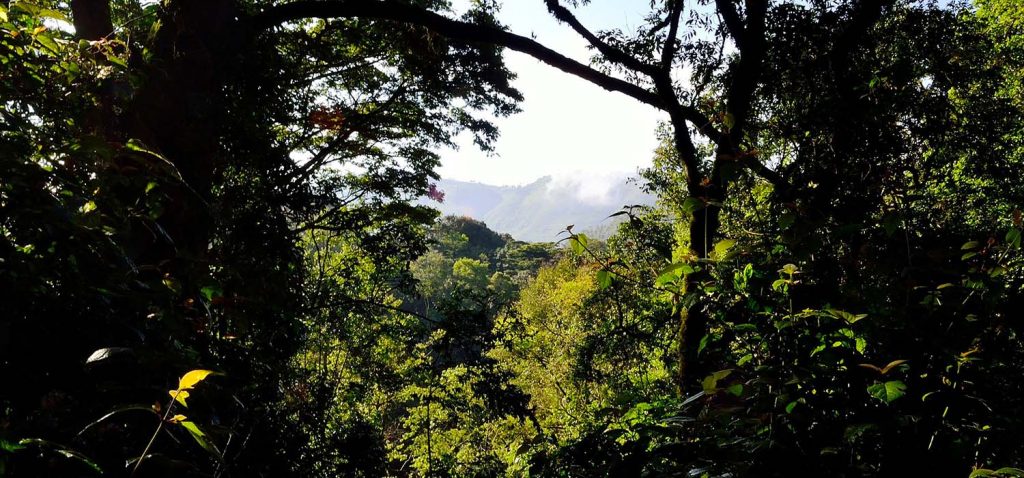
Le Code forestier de la RDC en son article 22 prévoit qu’une Communauté locale peut, à sa demande, obtenir à titre de concession, une partie ou la totalité de forêts en vertu de la coutume. C’est dans le cadre de la matérialisation de cet article qu’en date du 7 juillet 2020, le Gouverneur de la Province du Nord-Kivu a signé quatre arrêtés portant attribution des concessions forestières aux communautés locales (CFCL) Banisamasi, Basengele, Bananzigha et Bafuna-Bakano, du Secteur des Bakano en Territoire de Walikale après dix huit ans d’accompagnement de ce processus par l’ONG Forêt pour le Développement Intégral (FODI) partenaire du PPI depuis la fin de l’année 2019. A ce jour la RDC, compte soixante-dix CFCL déjà attribuées aux Communautés dont sept au Nord-Kivu. D’une superficie globale d’environ 120 260 ha, ces CFCL abritent les dernières populations des gorilles de Grauer vivant en dehors du Parc National de Kahuzi-Biega (PNKB), et des chimpanzés ainsi qu’une grande richesse d’espèces fauniques et floristiques. Par ailleurs, trois de ces CFCL sont contigües au PNKB dans sa partie septentrionale ; ce qui contribue à renforcer la conservation de ce patrimoine mondial de l’UNESCO. La phase de gestion de ces CFCL s’annonce déjà avec plusieurs défis dans l’accompagnement des communautés locales et autochtones pour l’utilisation durable des ressources forestières, la conservation des espèces animales endémiques et le développement socio-économique.
Conservation de la biodiversité à la périphérie du Parc National de Mole (Ghana) grâce au développement de filières vertes
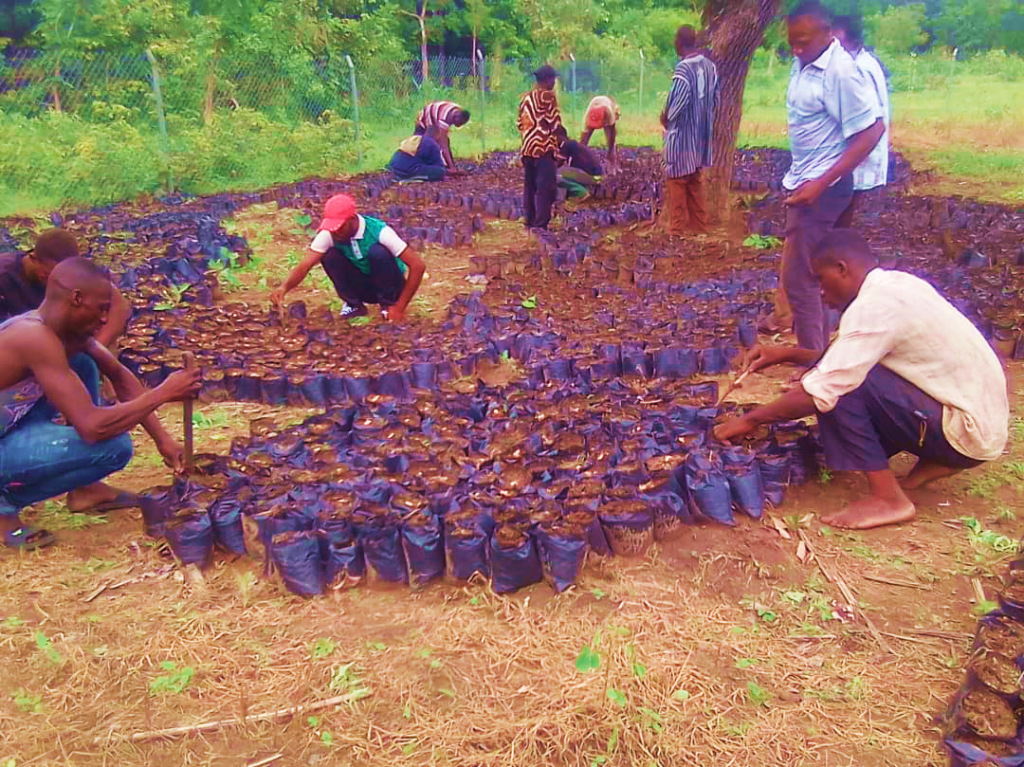
La Coalition for the Development of Northern Ghana (NORTHCODE) est une organisation non gouvernementale ghanéenne. Elle travaille dans le domaine de la conservation de la biodiversité et du développement rural dans l’aire communautaire de gestion des ressources (CREMA) de Jelinkon. Celle-ci est située en périphérie du Parc National de Mole (MNP – environ 4840 km²), au nord du Ghana dans la région des savanes. Le Parc, et dans une moindre mesure la CREMA de Jelinkon, abritent encore une importante biodiversité patrimoniale d’intérêt international pour la conservation. Ainsi, 5 espèces de plantes et autant de papillons endémiques y sont recensés. C’est aussi plus de 93 espèces de mammifères (éléphants, buffles, antilopes, cob de buffon et de fassa, lion, babouin…), 400 espèces d’oiseaux, 9 espèces d’amphibiens et 33 de reptiles qui y sont rencontrés. L’ensemble évoluant dans des paysages de savanes peuplées notamment de Parkia (Parkia biglobosa) et de Karités (Vitellaria paradoxa) deux arbres d’intérêts économiques et nutritionnels vitaux (en particulier en saison sèche) pour les communautés riveraines. Malheureusement, comme souvent, cette biodiversité est menacée par les pressions anthropiques locales : feux de brousse, braconnage, trafic de bois pour les marchés internationaux (ex : bois de rose), agriculture, surpâturage, activités de cueillette non raisonnées, etc. Pour pallier à cela et garantir l’intégrité écologique du Parc, NORTHCODE entend aujourd’hui œuvrer d’une part pour une gouvernance et une gestion plus inclusive et efficace des ressources naturelles. Et d’autre part souhaite développer des moyens de subsistance ‘’verts’’ dans les zones périphériques de la réserve. Pour la soutenir dans cette démarche, NORTHCODE est bénéficiaire d’une subvention du PPI depuis février 2020. Grâce à cette subvention, NORTHCODE a pu appuyer à l’organisation, à la formation personnalisée et à l’équipement de 220 producteurs de miel dont 65% de femmes et 35% d’hommes. Au cours de la formation un accent particulier a été mis sur la récolte et le conditionnement du miel afin de garantir une qualité sanitaire et gustative améliorant la compétitivité et la valeur ajoutée du produit fini. Au cours de cette même période, tous les anciens comités de gestion des ressources communautaires (CRMC) et les comités exécutifs de la CREMA (CEC) ont été réorganisés pour être plus efficaces et fonctionnels. En outre, 50 membres de la communauté ont été sélectionnés et formés (avec le soutien logistique et technique du Parc Mole) comme écogardes CREMA. Ils sont maintenant aptes à surveiller en permanence les activités illégales dans les zones centrales de la CREMA.Une pépinière communautaire a été créée et 10 000 plants d’arbres d’essences locales (kapok, balanites et parkia) ont été produit et transplantés sur des terres dégradées de la CREMA. Enfin, pour renforcer les liens entre les différents acteurs (ONG, autorités traditionnelles, agences gouvernementales, etc.) de la CREMA de Jelikon et du Parc de Mole, NORTHCODE a organisé plusieurs ateliers de partage d’expériences ainsi qu’un safari d’une journée au sein du Parc pour les membres de la communauté. Une expérience unique pour ces derniers qui pour certains, découvraient pour la première fois la beauté et l’ambiance d’une réserve bien protégée. A court terme, NORTHCODE prévoit de poursuivre et de développer ses activités de soutien aux patrouilleurs et producteurs de miel et compte pour ce faire travailler davantage à la mobilisation de ressources auprès de philanthropes et de donateurs.
Conservation of biodiversity on the outskirts of Mole National Park (Ghana) through the development of green industries
Coalition for Development of Northern Ghana, (NORTHCODE) is a Ghanaian Non-Governmental Organization (NGO). She working in the area of biodiversity Conservation and Rural Livelihoods reinforcement activities in the Jelinkon Community Resource Management Area (CREMA). NORTHCODE’s initiatives are focused at addressing challenges in biodiversity conservation, and rural livelihoods faced by populations living on the fringes of the Mole National Park, in the Savannah Region in Northern Ghana. With funding from IUCN/PPI 5, NORTHCODE is implementing an 18-month project dubbed “Biodiversity Conservation of Mole National Park’s periphery through Community-based Resource Management and Green Livelihoods Development” It is aimed at securing the ecological integrity of the Mole National Park (MNP) through more inclusive and effective governance and management of natural resources and development of green livelihoods in off-reserve areas. NORTHCODE project site is the Jelinkon CREMA, consisting of ten (10) communities fringing the Mole National Park (about 4 840 km²) located in the Guinea savannah agro-ecological zone of West Africa. The climate of the CREMA area is tropical continental with a rainfall pattern characterized by a single wet season which starts from April to October. The rest of the year is very dry with almost no precipitation. The vegetation in targeted CREMA area is predominantly Savannah vegetation with Parkia and Shea trees being some of the most important economic tree species. Environmental Context and Threat Within the fringe communities and beyond, human activities have been limited to localized farming and the collection of fruits, firewood, and honey-harvesting as well as annual bush burning. Ostensibly, the project area has been subjected to annual bushfires that devastate large tracks of the woodlands, increasing human activities in the ‘struggling’ ecosystem, continuous poaching activities, and increasing exploitation of natural resources for food and income by fringe-communities of the Park. In recent times, sustained deforestation for specific timber species mainly Rosewood and other timber species for foreign markets is rapidly degrading the Jelinkon CREMA. It is obvious that the natural resource base in the Mole National Park, the Jelinkon CREMA and its surrounding fringe community’s needs to be far more prudently managed than it is for now. The need for biodiversity conservation and livelihood reinforcement options is even more compelling and demanding in the wake of the influx in Northern Ghana by the Fulani pastoralists with large herds of cattle that within a few weeks, devastate large acres of fragile and vulnerable natural savannah vegetation on the fringes of the Park including the Jelinkon CREMA. All these resource exploitations in fringe communities and others is a major threat which is gradually undermining the conservation goals for off- and on-reserve parklands. Socio-Economic Context The Jelinkon CREMA and other Communities depend largely on the biodiversity of the ecosystems around them for their livelihoods and survival. Harvesting of Dawadawa (Parkia biglobosa), Shea (Vitellaria paradoxa), Non-Timber Forest Products (NTFPs), hunting of game, wild honey harvesting all constitute key sources of livelihood during the long dry season and provide an important safety net. Non-farm activities provide substantial additional income streams for men and women during the lean season such as agro-processing, commerce, charcoal production, firewood gathering among others. Agro-processing, which is mostly carried out by women is generally pursued through traditional methods and on very small-scale bases. These activities which are the inhabitant’s socio-economic source of living have adversely affected the environment of the CREMA intervention area and threaten the existence of the natural biodiversity. Intervention with funding from PPI 5, NORTHCODE’s project intervention is anchored on three strategic objectives : – Enhance beekeeping value chain as an incentive towards conservation within the Jelinkon CREMA in the Sawla Tuna Kalba District in the Savannah region of Ghana – Reinforce community-led governance of natural resource and contribute to biodiversity conservation and sustainable use of natural resources in 15,000ha of community-lands fringing the Mole National Park. – Sustain the model through information sharing, skill share and knowledge exchange. So far, 22 well organized honey producer groups in multiples of 10 per group totaling 220 beneficiaries (65% women 35% men) have been set up. A total of 100 bee hives and stands and other accessories including overall suits, wellington boots, hats and veil, smokers, hand gloves, locally made extractors among others were procured and distributed to all 22 groups. Tailor made training of beneficiaries on apiary establishment and management, honey harvesting, processing and packaging has been organized severally for producers with the aim of enhancing their capacities in the honey value chain. Within the period, all defunct Community Resource Management Committees, (CRMCs) and CREMA Executive Committees (CECs) were revamped to be more effective and functional. In addition, a total 50 Community members were identified and selected as CREMA Patrollers. With practical and technical support from the Mole Park, all 50 patrollers under went training on patrol duties and data collection and analysis. This is to equip patrollers with the needed skills to continuously patrol and monitor illegal activities in the CREMA core zones and to ensure the CREMA is protected. As part of efforts to restore lost biodiversity, 10,000 seedlings consisting of kapok, balanites and pakia were raised and transplanted in degraded lands within the CREMA. A nursery has been established for the communities to continue to raise seedlings for the restoration of degraded lands. NORTHCODE organized several workshops involving relevant stakeholders including NGOs, traditional authorities, Government agencies etc aimed at learning and sharing experiences and to effectively collaborate to addressing the devastating effects of the rapid biodiversity loss. A one-day safari was organized for the Jelinkon CREMA Community members to the Mole National Park to offer community members the opportunity to have a feel of the natural vegetative ambiance of the well protected Park reserve. NORTHCODE plans more training opportunities for patrollers and producer groups into the foreseeable future and needs support from philanthropists and donors.
New forest areas under community management in Walikale Territory in North Kivu, Democratic Republic of Congo
The Forestry Code of the DRC in its article 22 stipulates that a local community may, at its request, obtain as a concession, part or all of the forest regularly held under custom. It is in the context of the materialization of this article that on July 7, 2020, the Governor of the North Kivu Province signed four decrees awarding forest concessions to local communities (CFCL) Banisamasi, Basengele, Bananzigha and Bafuna-Bakano, from the Bakano Sector in Walikale Territory after eighteen years of support of this process by the NGO Forêt pour le Développement Intégral, in acronym FODI, PPI partner since the end of 2019. To date, the DRC has 70 CFCL already allocated to the Communities, including seven in North Kivu. With an overall area of about 120,260 ha, these CFCLs are home to the last populations of Grauer’s gorillas living outside the PNKB, and chimpanzees as well as a diverse range of wildlife and floristic species. In addition, three of these CFLCs are contiguous to the Kahuzi-Biega National Park (PNKB) in its northern part; this reinforces the conservation of this UNESCO World Heritage. The management phase of these CFLCs is already coming with several challenges in supporting local and indigenous communities for the sustainable use of forest resources, the conservation of endemic animal species and socio-economic development.
Exploitation aurifère en Guyane : l’UICN France demande l’annulation du permis Rexma
Le Comité français de l’UICN a demandé au Premier ministre d’annuler le permis d’exploitation aurifère accordé par le Ministre du Redressement productif à la société REXMA sur le territoire de la commune de Saül, situé dans un secteur du Parc amazonien de Guyane et dans une zone interdite à l’exploitation dans le schéma départemental d’orientation minière. Un arrêté ministériel du 26 octobre 2012, paru au JORF n°0288 du 11 décembre 2012 et signé par le Ministre du Redressement productif, accorde un permis d’exploitation de mines d’or et substances connexes, dénommé « Permis Limonade », à la société REXMA sur le territoire de la commune de Saül en Guyane. Ce permis concerne une zone interdite à l’exploitation minière du Schéma Départemental d’Orientation Minière de la Guyane qui est entré en vigueur depuis le 1er janvier 2012 et qui avait l’objet d’une large concertation à laquelle le Comité français de l’UICN avait participé. Ce secteur est également inclus dans la zone d’adhésion du Parc amazonien de Guyane et aura des impacts dans la zone cœur de ce parc national, puisque l’exploitation sera réalisée en amont et à proximité immédiate du bassin versant de la Crique Limonade qui en est partie intégrante (pollution au mercure, perturbation des cours d’eaux par les sédiments, etc…). Cette décision a suscité des oppositions parmi les élus guyanais et les habitants de la commune de Saül, située tout près de l’exploitation, qui se sont engagés dans une politique de développement durable du territoire basée notamment sur la valorisation touristique du patrimoine naturel. Cette décision est enfin en contradiction avec les objectifs des concertations actuellement menées sur la réforme du Code minier et la charte du Parc amazonien de Guyane. Le Président du Comité français de l’UICN a ainsi demandé au Premier Ministre, par un courrier en date du 19 décembre 2012, l’annulation de ce permis.